By Courage Ndalama, Psychology & Pre-Med and Child Policy Research Certificate student '27
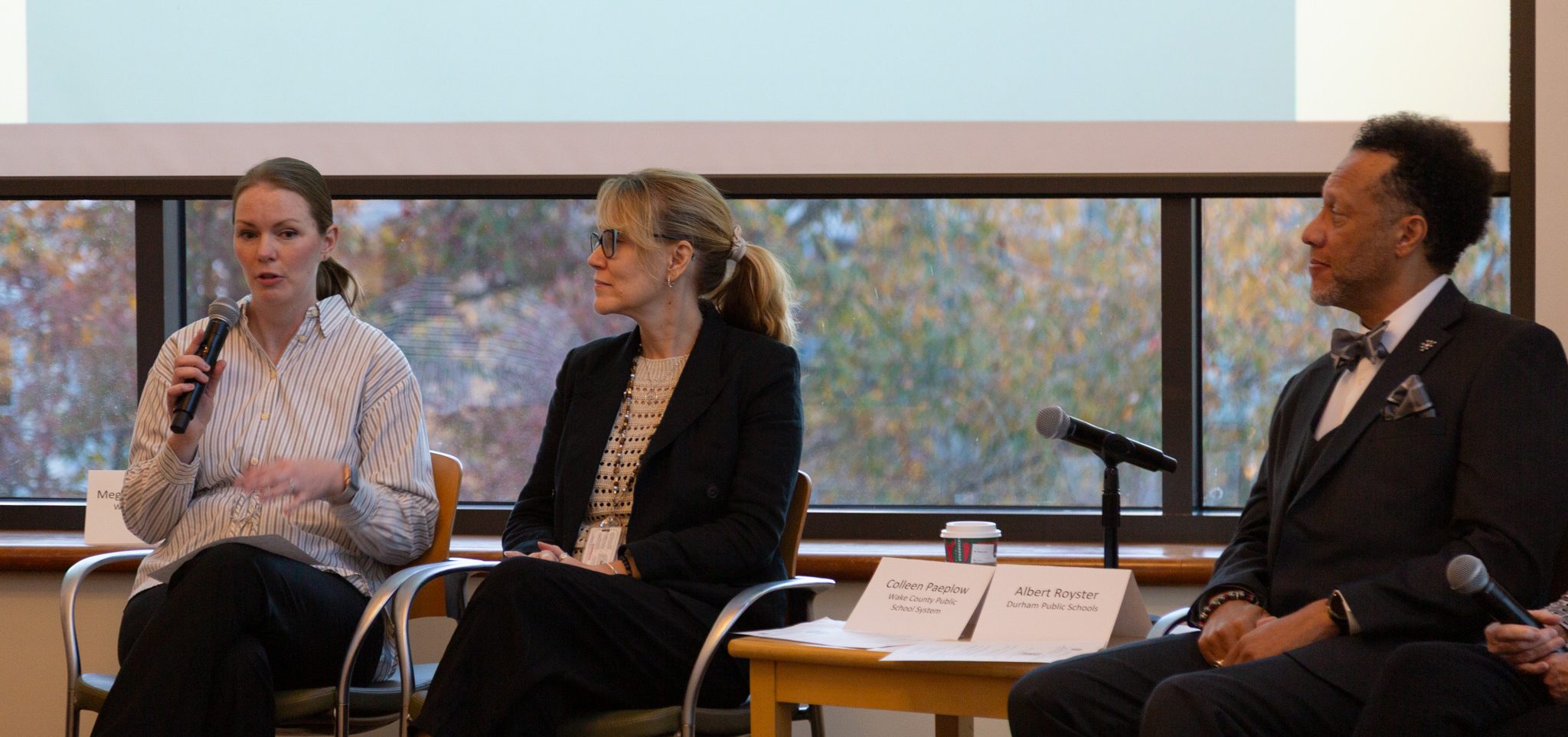
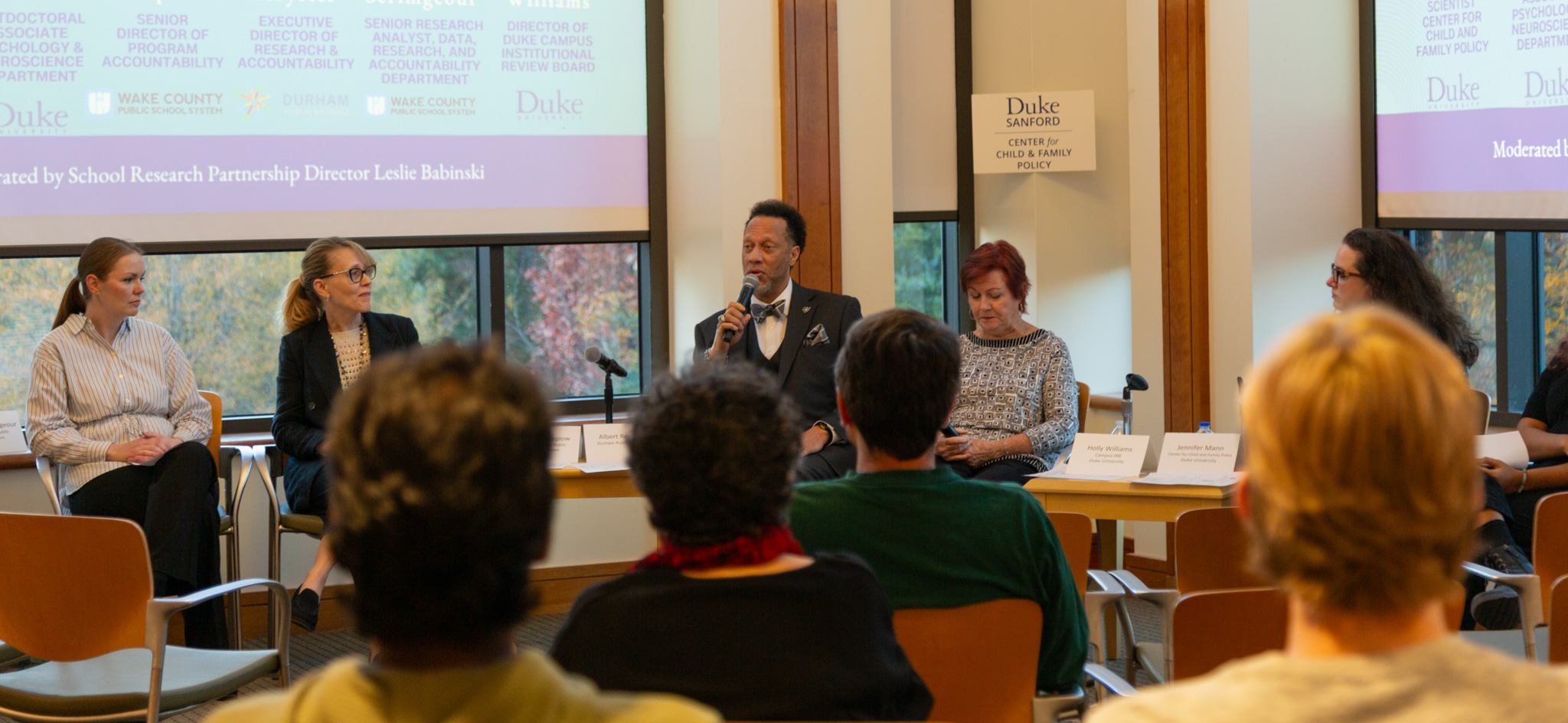
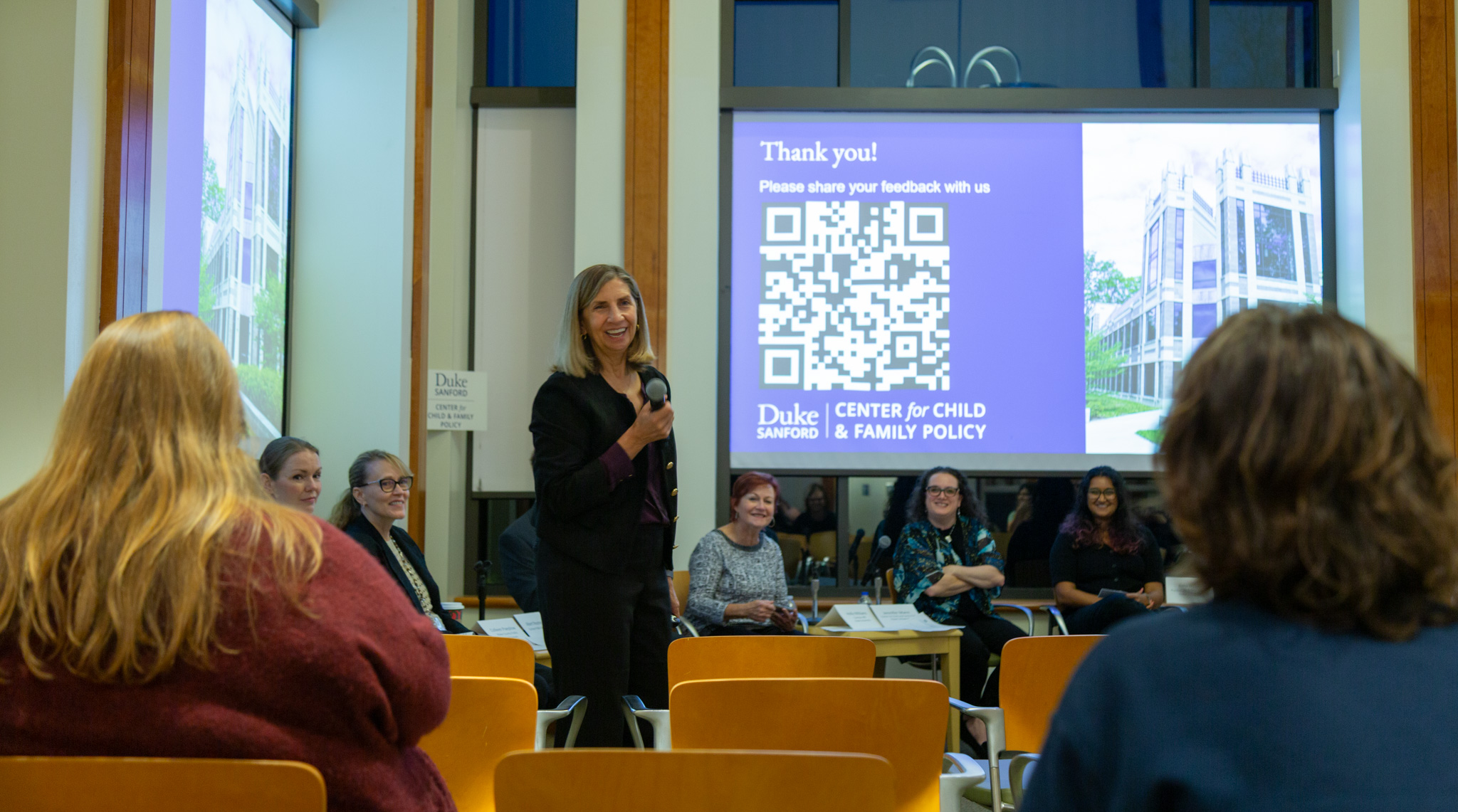
On November 19, the School Research Partnership at Duke in the Center for Child and Family Policy hosted its annual “Conducting Research in Schools” panel discussion. Moderated by Dr. Leslie Babinski, the panel was comprised of school district leaders and Duke University researchers: Dr. Albert Royster, executive director for research and accountability, Durham Public Schools; Dr. Colleen Paplow, senior director for program accountability, Wake County Public Schools; Meghan Scrimgeour, senior research analyst, Wake County Public Schools; Holly Williams, director of the Main Campus IRB, Duke University; Dr. Jennifer Mann, research scientist, Duke Center for Child and Family Policy; and Dr. Esha Naidu, postdoctoral associate, Duke University.

Kicking off introductions were school district panelists, who each described their district’s aims, beliefs, and the students they serve. Drs. Royster, Paplow, and Scrimgeour outlined the steps for conducting studies in their districts and offered advice on the review process. They provided examples of projects that are commonly rejected, such as those designed to take place during critical times, like end-of-grade testing. They also highlighted other perspectives I had not previously considered, such as the challenges of balancing valuing students' learning with advancing scientific literature. In the end, all school district panelists shared the view that the studies likely to be approved are aligned with their district’s strategic plans and benefit students and teachers.
Holly Williams followed up to provide the Duke IRB perspective. Anyone who is a part of research at Duke is familiar with the mandated CITI training. However, listening to Williams I gained a new appreciation for the IRB process in ensuring that only carefully crafted proposals reach the desks of people like Drs. Royster, Paplow, and Scrimgeour. On the one hand, as a student, the concept of conducting a study can at times seem foreign and distant. On the other hand, as a consumer of science and beneficiary of scientific findings, I’m comforted by the levels of review and consideration built into our systems.
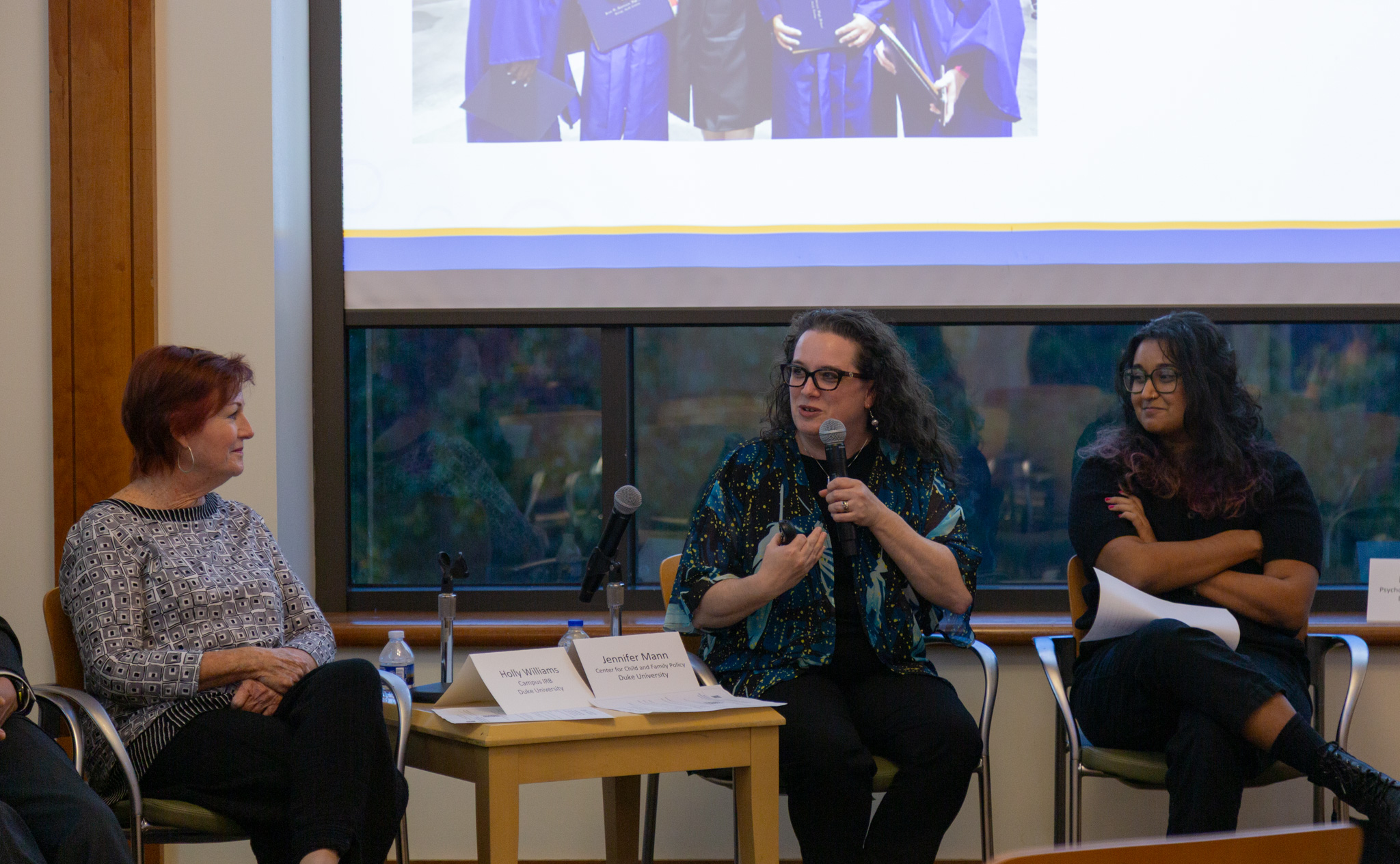
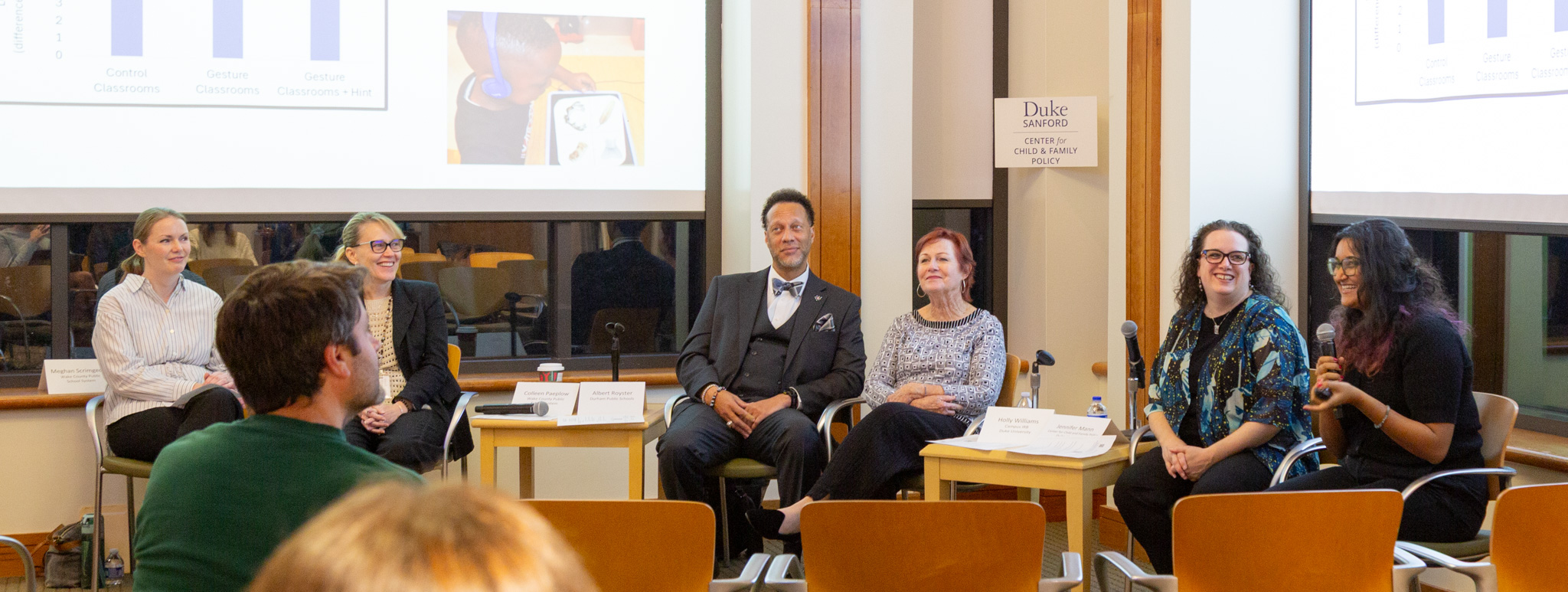
We heard next from Dr. Jennifer Mann, a research scientist at the Center for Child and Family Policy and one of my professors. While I’m familiar with her work and lectures, this was the first time I heard Dr. Mann discuss one of her studies – “BELLA Professional Learning” – and share how her experience as a former teacher turned researcher informs her work. As an undergraduate wrestling with what feels like far too many interests, I was inspired by Dr. Mann’s journey. She explained how her time in Wake County equipped her with skills and an understanding of what teachers and students go through as researchers navigate studies of their world. Dr. Mann’s many interests and experience have made her a more rigorous researcher.
Lastly, we heard from Dr. Esha Naidu, who described an intervention she administered on gesture and vocabulary learning. Hearing about the challenges and triumphs she faced, I was fascinated by how Dr. Naidu and her team created, conducted, and adapted an intervention for elementary school children. Before hearing from Dr. Naidu, I hadn’t given much thought to
the considerations researchers working with children must take into account. However, I left this portion of the event – and panel discussion as a whole – with my eyes open to the intricacies of in-school research.
One day, I hope to be a part of the kinds of studies I heard about today – studies that meet the unique challenges of in-school research to reap the benefits and advancements they offer.

Courage Ndalama is a junior majoring in Psychology and Global Health and a Child Policy Research Certificate. She is interested in a career as a child psychologist and designing school-based mental health interventions. She is a CCFP Research Assistant.